Orwell's Penny 2 + 2 = 5
- 17GEN4

- 10 hours ago
- 4 min read
Orwell’s Penny: 2+2=5? US Penny Elimination 2026 Forces Cash Rounding Laws – Retail Sales Impact & State Accounting Changes
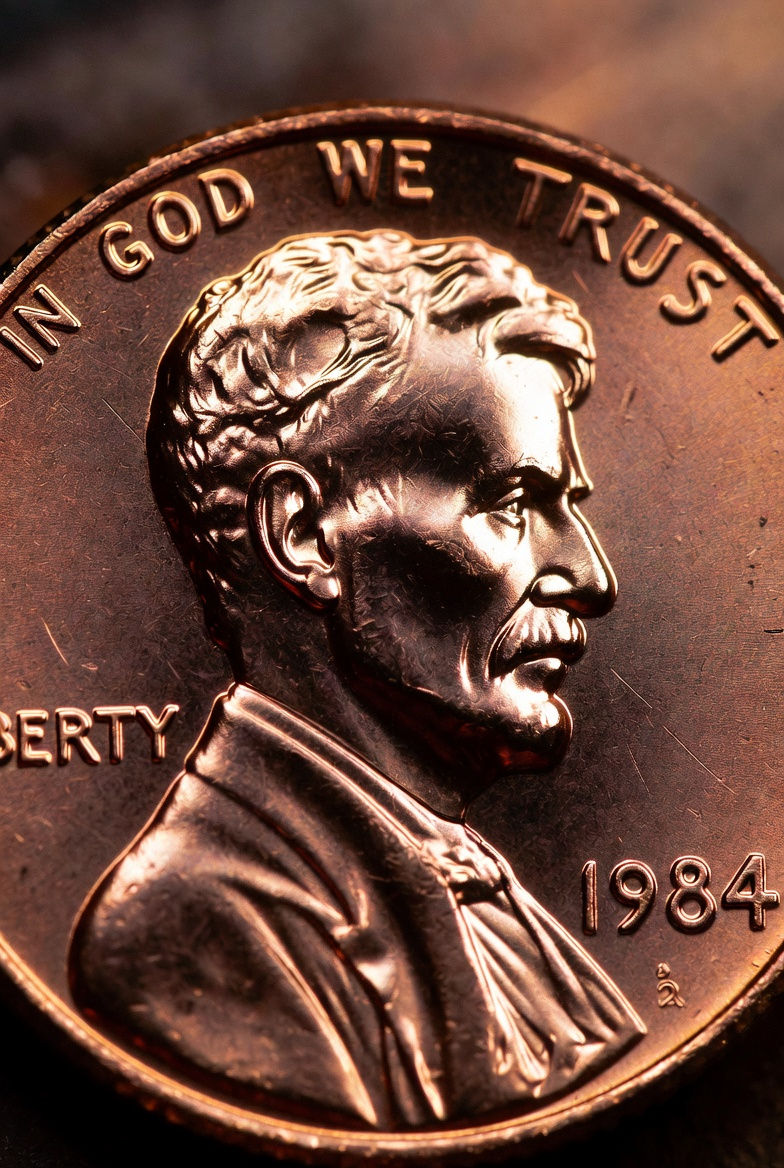
Orwell’s Penny: 2+2=5? US Penny Elimination 2026 Forces Cash Rounding Laws – Retail Sales Impact & State Accounting Changes 17GEN4 News - Axiom City 5/21/2026
17GEN4 News - 17GEN4.com
Orwell’s Penny: How “2 + 2 = 5” Is Rewriting America’s Cash Registers
May 21, 2026, 1:21A - In George Orwell’s dystopian classic 1984, the Party forces citizens to accept that “2 + 2 = 5” as an act of ultimate control over truth itself. Today, a quieter but no less Orwellian shift is unfolding in the U.S. monetary system: the federal government has effectively declared that exact change no longer matters. The penny is dead — and with it, the simple arithmetic of retail transactions.
Last year, President Donald Trump directed the Treasury Department to halt production of one-cent coins for general circulation. The U.S. Mint struck its final circulating pennies on November 12, 2025. Existing pennies remain legal tender, but supplies are rapidly dwindling, and no new ones are coming. The move was framed as fiscal responsibility: each penny cost nearly 3.7 cents to produce, draining taxpayers roughly $85 million annually in seigniorage losses.
Yet the real story lies in what replaces the penny. Without it, cash transactions must now be rounded to the nearest nickel. Federal legislation such as the Common Cents Act (H.R. 3074 / S. 1525), introduced in April 2025 and still advancing through committees, seeks to codify this rounding rule nationwide for cash payments while leaving electronic transactions untouched.
The result? A forced mathematical compromise that echoes Orwell’s warning: the government is redefining basic financial truth for the sake of “efficiency.” A $9.98 total might round to $10.00, or a $9.97 total might round to $10.00. Over millions of daily cash sales, those pennies add up — or disappear — in ways that subtly reshape who wins and who loses at the register.
Retail sales are feeling the squeeze first. Brick-and-mortar stores, especially convenience outlets, gas stations, and small businesses that still rely heavily on cash, are scrambling to update point-of-sale systems. The Richmond Fed estimates the national “rounding tax” on consumers could reach about $6 million annually from cash-only transactions — modest on a macroeconomic scale, but real for everyday shoppers who pay in bills and coins.
Electronic payments dodge the issue entirely, accelerating America’s shift away from cash. Industry analysts note that the penny’s demise may quietly boost card and digital adoption, benefiting big retailers and payment processors while pressuring smaller merchants who must absorb rounding volatility or pass it on through pricing adjustments.
At the state level, lawmakers are not waiting for Washington. As of March 2026, five states — Arizona, Indiana, New Mexico, Tennessee, and Utah — have already enacted specific penny-elimination legislation governing price rounding for cash transactions.
These laws generally require sales tax to be calculated on the pre-rounded total, protecting state revenue, while authorizing symmetrical rounding (down for 1-2 or 6-7 cents; up for 3-4 or 8-9 cents) on the final cash amount due.
Other states, including Texas and Washington, have issued detailed guidance allowing retailers to round totals when exact change is impossible, but with strict rules: tax must still be remitted based on the unrounded figure. Gains from rounding become taxable income for businesses; losses may be deductible — creating new accounting headaches and potential audit triggers for retailers.
Possible repercussions are already emerging. Consumer advocates warn of a “hidden inflation” effect in cash-heavy sectors, where frequent upward rounding could erode purchasing power for lower-income households who use cash more often. Retail associations counter that the change will ultimately save businesses time and money previously wasted on penny handling.
Tax professionals foresee reconciliation challenges: point-of-sale systems must now track both the “true” tax-calculated amount and the rounded cash total, potentially complicating quarterly filings. Some states are even considering new reporting requirements to monitor rounding impacts on sales tax collections.
Critics of the policy invoke the Orwell parallel directly: by erasing the penny, the government has compelled merchants and consumers to accept that a penny’s worth of value can simply vanish or appear depending on bureaucratic decree. “Two plus two equals five” was never about math — it was about power.
As supplies of existing pennies dwindle further into 2026, the full effects will sharpen. Will Congress pass uniform national rounding rules? Will more states follow Arizona and Indiana’s lead? Or will the penny’s ghost linger in registers nationwide, a relic of a time when exact change still mattered?
17GEN4 News will continue monitoring this quiet revolution in America’s pockets — because in the end, even the smallest coin can reveal the largest shifts in how truth is counted.
Land of Lincoln
__________
Arizona law now requires retailers to use Swedish rounding for cash transactions, rounding the final total to the nearest five-cent increment when pennies are not available. This law was enacted to address the decline in penny production and aims to simplify cash transactions for both consumers and businesses.
__________
__________
2 + 2 = 5 or two plus two equals five is a mathematical falsehood which is used as an example of a simple logical error that is obvious to anyone familiar with basic arithmetic. The phrase has been used in various contexts since 1728, but is best known from the 1949 dystopian novel Nineteen Eighty-Four by George Orwell. As a theme and as a subject in the arts, the anti-intellectual slogan 2 + 2 = 5 pre-dates Orwell and has produced literature, such as Deux et deux font cinq, written in 1895 by Alphonse Allais, which is a collection of absurdist short stories; and the 1920 imagist art manifesto 2 × 2 = 5 by the poet Vadim Shershenevich...
__________


Comments